Friday, June 08, 2007

Happy Birthday Nancy Sinatra

Born into showbiz royalty on the 8th of June 1940 in Jersey City, New Jersey, Nancy Sinatra is 67 today.

Although Nancy began making records on father’s Reprise label in 1961 it is fair to say she didn’t really hit her commercial, or creative, stride until 1965 when Reprise records producer Jimmy Bowen coaxed a reluctant Lee Hazlewood to produce her.

Jimmy Bowen had tasted some chart success himself as a member of Buddy Knox’s Rhythm Orchids in 1957 with I’m Sticking With You, originally the flipside of Buddy Knox’s big seller Party Doll.

1957 was also the year that one Tommy Sands got his break. He was cast as the lead in a television play, The Singing Idol, and of the back of that had a hit with Teenage Crush. He was subsequently signed to Capitol, where he enjoyed several smaller hits. Sands’ was enlisted into the military, and on September 11 1960, dressed in his air force uniform, married a twenty year old Nancy Sinatra.

In December 1960 Frank Sinatra announced the formation of Reprise Records with an artist roster that included pals Dean Martin and Sammy Davis Jr. Nancy joined the label in 1961, having previously appeared in her Dad’s 1960 show to welcome Elvis Presley home from the army.

Bowen joined Reprise in the early sixties where, never much of a singer, he enjoyed his greatest success as a producer, including in 1965, Houston a hit for Dean Martin penned by Bowen’s neighbour Lee Hazlewood.

Hazlewood had already enjoyed some success as a writer and producer first with Sandford Clark with whom he had written and recorded The Fool which sold 800,000 copies and later, as a producer, with Duane Eddy. In 1963 he had quit the music industry in disgust:

“Everything you heard on the radio was Beatles, Beatles, Beatles. Not only that, but they were hailed as innovators when they were doing things that were done four years earler by the Everly Brothers” he told a radio interviewer in 1968.

Bowen coaxed his neighbour out of premature retirement and, in 1965, Hazlewood produced the hit I’m a Fool for Hollywood brat pack Dino, Desi & Billy. Hazlewood did not enjoy his time working with Dean Martin and Desi Arnez’s spoilt sons and was not, therefore, particularly thrilled when approached to work with Nancy who he saw as just “another second generation act”.

"He was part Henry Higgins and part Sigmund Freud," recalled Nancy Sinatra, who had, by that time divorced Tommy Sands, for The New York Times in January this year. She continued "He was far from the country bumpkin people considered him at the time. I had a horrible crush on him, but he was married then."

Describing working with Nancy, Hazlewood wrote in the introduction to his clumsily titled book Lee Hazlewood’s The Pope's Daughter-His Fantasy Life with Nancy and Other Sinatra's:

“What’s it like to work with a Nancy Sinatra? It’s a visit to Disneyland, only your father owns all the rides. It’s an evening in the medicine cabinet of Edgar Allen Poe’s mother… It’s a Las Vegas stage, sitting on a two-dollar stool in front of a fifty-two-piece orchestra, next to a lady in a five thousand-dollar gown; you’re singing a little flat and wondering if the fly is open on your eight-dollar ‘jeans’. It’s Beauty and the Beast selling a ‘fix’ to the Mickey Mouse People. It’s frustrating, foolish, Falstaffian, freaky, fucked-up and fun.”

After several hitless years on Reprise Nancy was open to Hazlewood’s suggestions, some of which must have appeared a little out there to a showbiz princess:

"Sugar Town was about LSD, Some Velvet Morning is about drugs and sex, and we had a quirky thing going with that stuff. Sand is one of the sexiest songs ever made." she told The Guardian in April 2005.

Hazlewood changed Nancy’s singing style and it paid immediate dividends when So Long Babe became a modest chart hit:

“She was singing too high for one thing and for another she was trying to be Goody Two Shoes which was not her natural style.” said Lee in the sleevenotes to his solo 1966 album The Very Strange World Of Lee Hazlewood.

The following year Nancy traded those goody two shoes for boots.

Written in 1963 Hazlewood was initially reluctant to play These Boots Are Made For Walking for Nancy because in its early incarnation the song contained the word “fuck.”

“But Nancy was in love with the song. It really needed her, by the way, we changed it around and I wrote a third verse for it. Didn't have that until the day of the session because I had forgotten all about it." Hazlewood told Noel Mengel of the Courier Mail.

These Boots Are Made For Walking was an instant smash, backed by that legendary coterie of Los Angeles session musicians known as The Wrecking Crew, Nancy reached number 1 in February 1966.

More hits followed including How Does That Grab You Darlin’? and the aforementioned Sugar Town. The former, incidentally, provided the title for Nancy’s second album which included her version of Sonny Bono’s song Bang, Bang (My Baby Shot Me Down) that Quentin Tarantino used as the theme for the Kill Bill 1 opening credits.

Kill Bill was not Nancy’s first foray in to soundtracks. Tucked away on the flipside of the US single How Does That Grab You Darlin’? is The Last Of The Secret Agents. It was the title song to a spy spoof of the same name that starred comedy duo Marty Allen and Steve Rossi alongside Nancy. Produced and written by Hazlewood it is basically a reworked Boots with riffs from John Barry’s Thunderball theme welded on.

The following year Nancy had the opportunity to record a Bond theme proper when the producers of You Only Live Twice decided they didn’t like theme song as it was originally sung by one Julie Rogers so approached Frank Sinatra about the job. Sinatra Snr passed on it but suggested they use his daughter Nancy. It was not an easy gig.

"You Only Live Twice was a real stretch for Nancy," John Barry, the songs composer recalled for Eddi Fiegel's book John Barry A Sixties Theme, "as a song it's kind of all over the place, and the bridge is particularly difficult, so all in all it was a bit of a reach for her. whats now in the movie was made up of about twenty-four takes. It was a real masterpiece of editing. There was just no way we'd have got it in one take. She'd get one bit right the first time but then she'd get another bit wrong. So that was what we call 'a glue job'. She knew. She'd say 'That's a good bit there, you can cut that in, John, can't you?' She didn't have any illusions about it."

Still 1967 was a big year for Nancy, not only did she sing that years Bond theme but she conceived and produced an Emmy winning television special called Movin’ with Nancy. Besides featuring a great version of Lionel Bart's Who Will Buy? it saw the unveiling of Nancy and Lee’s undisputed masterpiece: Some Velvet Morning.

"I particularly love Some Velvet Morning. It's a beautiful song, but also melancholy and dark, because that was Lee. He was funny and clever and talented, but he also had a dark side, which added something special to the songs we did together."Nancy told New Zealand's The Sunday Star Times in April 2008

Nancy and Lee had first sang together the previous year on Summer Wine, the flipside of Sugar Town:

“We started together… out of absolute greed on my part.” Hazlewood told Richard Hawley for The Observer Monthly Music Magazine in October 2006.

Written for Movin’ with Nancy, a TV special, Hazlewood anticipated that Some Velvet Morning, a druggy reverie, would cause problems with the censor. He recalled in the sleeve notes to 2002 tribute album Total Lee- The Songs Of Lee Hazlewood:

“We did it and then you submit it to the censor at NBC and I thought, of course, they’re going to find something with this one that they don’t like, really they’re going to find something! The man questioned the line “and how she made it in”, I. N. and I said “No, it’s E.N.D”…And when I told the guy that he goes “Oh, well that’s fine then, that’s OK.” And I didn’t say what about anything . Somebody said “What is the song about?" and I said “It’s about three and a half minutes that’s about all I can tell you.” But it worked.”

Also in 1967 Frank Sinatra earned his first US gold record with the bizarro Somethin’ Stupid, a wildly inappropriate duet with Nancy produced by Bowen and Hazlewood. Nancy sounds cramped and miserable on the record, a sulky teen reluctantly singing along with dad. Perhaps, like me, she found the whole concept a bit creepy.

In 1968 Nancy appeared as Susan Jacks, a part originally intended for Petula Clark, in the movie Speedway with Elvis Presley. She had a solo number, Your Groovy Self, making her the only singer ever to have a solo song appear on an Elvis soundtrack (prior to his death).

In 1970 Hazlewood decided to up sticks and move to Sweden, shattering the partnership with Nancy.

"It was crazy," Sinatra said in The New York Times . "And he really left me in the lurch. He kept shooting himself in the foot all the time, and I never knew why. He was always his own worst enemy."

Nancy never really went away though. She recorded throughout the 70’s and 80’s including, in 1981, a country album with Mel Tillis called Mel and Nancy but she never again recaptured the brilliance of those late Sixties Reprise recordings.

"I knew this music was unique when we were making it and the proof is that 40 years on, people are still listening to it." she told The Guardian in 2005.

In 1995 Nancy relaunched herself with the One More Time album and, at 54 years of age, a Playboy photoshoot which according to her website “demonstrated once again that sexuality and feminism are not mutually exclusive”.

In 2004 Nancy’s career underwent something of a revival as she was discovered by a new generation of fans, including Morrissey who invited her to take part in Meltdown at the Royal Festival Hall that year. It was Nancy’s debut live performance in London.

I saw Nancy that night and well remember the hysteria that greeted Sugar Town. You can view some of it here courtesy of Richard Gibson.

In May last year Nancy's Sinatra’s star was added to the Hollywood Walk of Fame and next month Nancy will be presented with the President’s Award For Excellence In The Arts by National President John Rowan.

Tuesday, June 05, 2007

10 Records That Changed The World Part 1


The June issue of Mojo magazine featured a list of 100 Records That Changed The World.


Inspired by this Testify presents, in two parts, 10 records NOT included in the Mojo list that, nontheless, changed the world.


Bob Wills and his Texas Playboys – Ida Red

No list of influential records is complete without reference to Bob Wills. Together with Milton Brown, Wills was a founding member of the Fort Worth Doughboys and their sole recording, Sunbonnet Sue/ Nancy Jane in February 1932, provided the blueprint for a hybrid form of dance music that became known as Western Swing.

Incorporating elements of Big Band music, old time fiddle music and the blues Western Swing was a raucous sound that caught the ear of, amongst others, Chuck Berry.

Berry’s audition tape for the Chess brothers featured his take on an old traditional number called Ida Red.

As Berry recalled in his 1987 autobiography: “I’d heard it (Ida Red) sung long before when I was a teenager and thought it was rhythmic and amusing to hear. I’d sung it in the yard gatherings and parties around home when I was first learning to strum the guitar in my high-school days.”

Probably the earliest recording of this song was by Fiddlin' Powers & Family on August 19, 1924 (issued December 1924). Bob Wills' first recording of Ida Red, and the one which provided the inspiration for Berry, was in November 29, 1938 in Dallas, although it wasn’t issued until October the following year. Wills cut another, souped up, version in 1950 called Ida Red Likes The Boogie.

Leonard Chess suggested Berry write new lyrics for Ida Red and speed it up a bit and thus the rock ‘n’ roll staple Maybellene was born.

Also listening to Bob Wills was Elvis Presley whose 1954 Sun recording of Milk Cow Blues grafted verses from Wills’ 1946 recording Brain Cloudy Blues onto Kokomo Arnold’s original.

Bill Haley and his Comets - Rock Around The Clock

Prior to 1951 Haley had recorded Western Swing inflected country songs.

Then, in 1951, Bill Haley and the Saddlemen cut a version of Jackie Brenston and His Delta Cats kickin’ R&B track Rocket 88.

The following year he changed the band personnel and christened them the Comets and, in 1953, with Crazy Man Crazy, recorded the first white rock hit.

On the strength of this they were signed to Decca in 1954 and (We’re Gonna) Rock Around The Clock was released in May of that year. It was a flop.

Until, that is, the movie Blackboard Jungle was released in 1955. Intended as an examination of delinquency in America’s city schools Blackboard Jungle was the first film to use a rock ‘n’ roll song as part of its soundtrack.

It pitted solid decent English teacher Rick Dadier (Glen Ford) against North Manual High Schools teenage rabble,as the opening credits faded (We’re Gonna) Rock Around The Clock blared out over images of general juvenile delinquency. By the time the movies chief juvenile delinquent, Artie West (Vic Morrow), was seen trashing the beloved jazz records of a liberal maths teacher the link between rock ‘n’ roll and a kind of violent nihilism had been forged. By the end of 1955 (We’re Gonna) Rock Around The Clock had sold six million copies.

Johnny Ace – Pledging My Love

Recorded with the Johnny Otis Orchestra Pledging My Love was Johnny Ace’s seventh record and was released in the first week of 1955. It reached number 1 in the R&B charts immediately and hit the pop top twenty in February.

It was also rock ’n’ roll’s first posthumous hit. On December 24th 1954 backstage at the Houston City Auditorium Johnny Ace became the founding member of what Kurt Cobain’s mother called “that stupid club”, apparently whilst playing Russian roulette. He was only 25 years of age.

Hound Dog chanteuse Big Mama Thornton, who witnessed the event, recalled: “that kinky hair of his shot straight out like porcupine quills”. (whilst Johnny Otis noted: “He was used to playing a kind of controlled Russian roulette, but this time he made a fatal mistake because the hammer fell on a loaded chamber” Well, duh!).

Elvis Presley was a fan and had Johnny Ace’s 1955 single in his record collection.

In June 1977 when RCA issued the single Way Down, as a taster for the Moody Blue album nobody could have known it would be the last single released during Elvis Presley’s lifetime. On its flipside was Elvis’ cover of Pledging My Love.

Carl Perkins – Blue Suede Shoes

Carl Perkins was an aspiring musician playing a tough Hank Williams inspired brand of honky tonk in the bars of Jackson, Tennessee in 1954, when his wife first heard Presley’s recording That’s All Right (Mama). She was moved to comment “Carl, that sounds just like y’all”

When Perkins found out that it was recorded in Memphis, a short drive away from Jackson, he went to Sun studios and waited and waited until Sam Phillips, the labels founder and Elvis’ first mentor, agreed to see him.

Perkins classic was inspired by a real incident. As Perkins recalled on the 706 ReUnion album:
“I heard a boy tell a girl, he said ‘Uh- Uh don’t step on my suede’s, I was playing a little club in Jackson, Tennessee.”

The song was recorded on December 19th 1955 and was issued in January the following year with Honey Don’t on the flip side.

Blue Suede Shoes went to number 1 in the Country charts, number 2 in the Pop charts and then on March 17th 1956 Carl Perkins made history, and sold over a million records in the process, when he became the first country artist to reach the national Rhythm and Blues chart.

Wanda Jackson – Honey Bop

Following the success of (We’re Gonna) Rock Around The Clock and Blue Suede Shoes the floodgates opened.

Former country singer Jackson became the first girl singer, inspired by Presley’s example, to cut an out and out rock ’n’ roll record.

Having already dabbled with rock ‘n’ roll with I Gotta Know, a song which featured as much country as it did rock ‘n’ roll, Wanda went the whole hog in September 1956 with Honey Bop which, incidentally, was co-written by Mae Axton, who had also co- written Heartbreak Hotel. Although by no means Jackson’s finest work and not particularly commercially successful it nevertheless blazed the trail that other women would follow.

It is a disgrace that the Rock ‘n ‘ Roll Hall Of Fame is yet to recognise Jackson’s pioneering contribution to the music it purports to support.

Regular readers of Testify (ho-ho) already know what a fan of Wanda Jackson I am and it only remains for me to remind you of Wanda Weekend at The Luminaire next month.
You can read the rest of this list here.

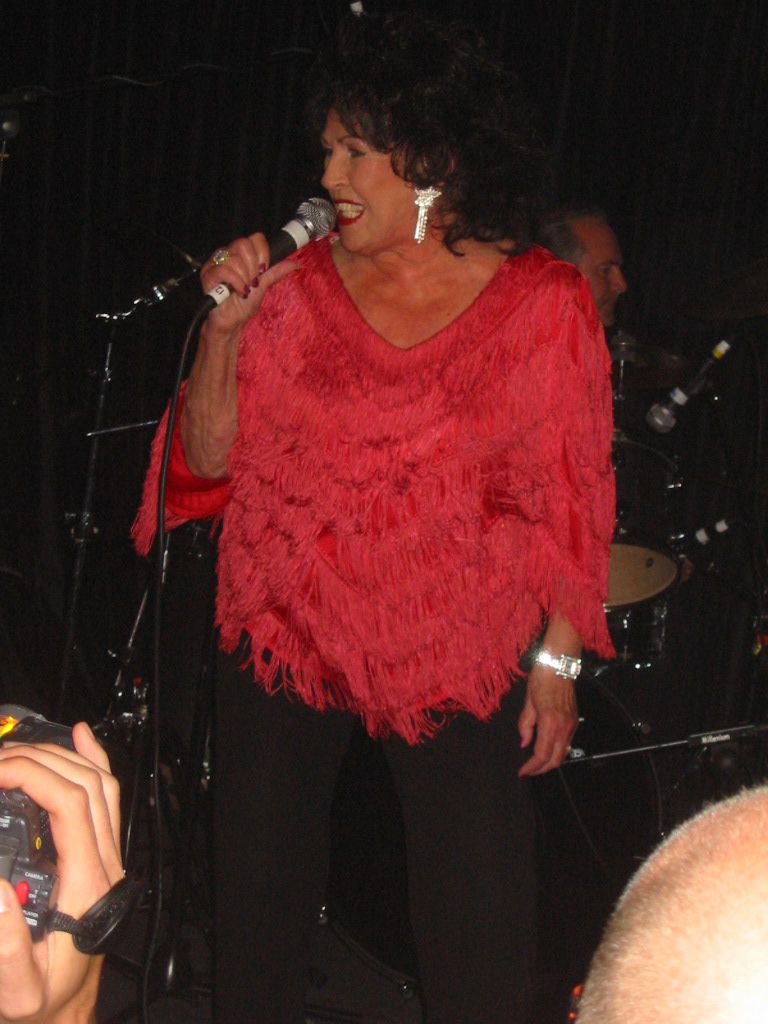
The picture accompanying this post shows Wanda Jackson and Bob Wills at the Showboat in Las Vegas in 1959, some show eh?

Sunday, February 18, 2007

Happy Birthday Pee Wee King


When Carl Perkins’ Blue Suede Shoes became the first ever record to appear simultaneously in the country, pop and R&B charts a slew of cover versions quickly followed. Elvis Presley’s is probably the best known of these but accordion player Pee Wee King with his Western swing outfit The Golden West Cowboys, were there first. King had something of a headstart on rival s having been given a prerelease acetate of the song by Perkins himself when they played the same bill in Memphis. The Golden West Cowboys' version was recorded on February 7th 1956 and featured Walter Hayes, the band's fiddle player, on vocals. It is, in truth, a workmanlike and unconvincing reading of Perkins’ classic.

King made an altogether better stab at rock ‘n’ roll later that same year with vocalist Dick Glasser. Ballroom Baby and Catty Town, both of which Glasser had a hand in writing, are very pleasing examples of early rock ‘n’ roll. Pee Wee King recalled: “(Dick Glasser) was a very good rock ‘n’ roll singer …he fit into our group like the missing piece of a jigsaw puzzle. The first two recordings we did with him were a smash. The people at RCA Victor thought I was going nuts with our new sound. I said ‘No. I’m an entertainer and we have to change with the times. Rock ‘n’ roll is changing American music, and that includes country music.’”(from Hell-Bent for Music Wade Hall)

King was not altogether the rockin’ virgin that this would suggest though. Nearly a decade before the Glasser recordings King had, with the band's regular singer Redd Stewart, written and recorded Ten Gallon Boogie which features the rockin’est accordion solo ever. It was the Golden West Cowboys contribution to the hillbilly boogie craze that swept country music in the late forties and early fifties, and which helped to lay the foundations of rock ‘n’ roll. Indeed King’s friend, Bill Haley, had recorded a number of hillbilly boogies before he discovered rock ‘n’ roll. Jolly Joyce, Haley’s booking agent, tried to persuade King to change the name of his act so that he could book him overseas as a rock ‘n’ roll act: “ I said, ‘Nothing doing! I’ve worked hard to make our name mean something and I’m not about to change it. Anyway, why should I want to become a rock ‘n’ roll band? I can play rock ‘n’ roll any time I want and still call our band the Golden West Cowboys” (from Hell-Bent for Music Wade Hall).

However it is not as a rock ‘n’ roll pioneer that King is best remembered, nor as the man whose band introduced the electric guitar to the Grand Ole Opry, nor yet as a pioneer of television, although in November 1948 Pee Wee King’s was the first show on the state of Kentucky’s first television station, but rather as the composer of one of the biggest hits in music history: The Tennessee Waltz.

Pee Wee King was an unlikely candidate for country stardom. Born on February 18th 1914 in Milwaukie of Polish stock he was christened Frank Julius Anthony Kuczynski and his favoured instrument, the accordion, was not regarded as a ‘proper’ country instrument at that time.

In 1929 the 15 year old Kuczynski formed his first band and in 1930 he met saxophonist and band leader Wayne King, who was himself from a Polish background, who gave him this advice: “You need a catchy name…Now remember: K-I-N-G. Nobody can misspell it. Nobody can mispronounce it. That’s your hook. You say your name is Frank. Call yourself Frankie. It has a better ring. Frankie King that’s a name nobody will forget” (from Hell-Bent for Music Wade Hall). Thus Frankie King and the Kings Jesters were born.

In 1934 a stroke of good fortune brought Gene Autry into King's life. Frankie King and the Kings Jesters were playing the Polish–American Hour on WJRN in Racine. Gene Autry together with his band, The Range Riders and their agent were touring southern Wisconsin when they were forced to pull up at a garage in Racine to have a fender straightened on their car. Whilst they were waiting for the repair to be completed they heard Frankie King’s band on the service stations radio. Autry’s agent, Joe.L. Frank, was impressed enough to ask King to join The Range Riders, for the remainder of the tour.

“I wasn’t with the group long before I got my nickname. There were too many Franks in the band so Mr Frank said we had to have nicknames to tell us apart. He first wanted to call me Shorty, but I didn’t like that one, so we settled on Pee Wee” (from Hell-Bent for Music Wade Hall).

Autry left for Hollywood shortly after the tour ended and the Range Riders disbanded. Joe Frank invited Pee Wee King to join a new band he had put together, the Log Cabin Boys, who performd on WNOX in Knoxville. The steady income it provided enabled King to marry Joe Frank's stepdaughter Lydia Frank in December 1936.

In January the following year King and his new wife moved to Louisville. Joe Frank was already there and organising a new band for King to lead. Pee Wee King and the Golden West Cowboys , as the band were known, auditioned successfully for The Grand Ole Opry in 1937 and were regulars for the next ten years.

Throughout the band's thirty year lifespan, The Golden West Cowboys underwent several line up changes and at one time or another featured such luminaries as Cowboy Copas and Eddy Arnold.

Redd Stewart first joined The Golden West Cowboys in 1940 before being drafted into the Army and Stewart's return from the armed services ushered in what Pee Wee King thought of as the golden age of The Golden West Cowboys.

It was whilst driving back to Nashville from a show in Texarkana, Texas in December1946 that King and Stewart wrote The Tennessee Waltz

“We were getting close to Memphis and had the radio playing…when we heard the disk jockey say ‘I want you folks to hear Bill Monroe’s new song dedicated to his home state of Kentucky. It’s called The Kentucky Waltz’. While the record was playing Redd said ‘Pee Wee, I’ve got an idea for a song. Trade places with me and drive and I’ll get that kitchen matchbox that I light my cigars from out of the glove compartment and we’ll write a song about Tennessee. After all I was born in Ashland City, Tennessee and we both live there now. We can write a Tennessee waltz” (from Hell-Bent for Music Wade Hall).

The melody already existed, King having devised it as the Cowboys theme song though at that time it was known only as No Name Waltz:

“Redd sat there writing the words on the matchbox as we both hummed the melody we knew so well. We’d hum along and Redd would write a word down. Every once in a while he’d say ‘How does this sound?’ and he’d sing the words to the melody. Finally we had the words pretty much the way everybody knows them today”(from Hell-Bent for Music Wade Hall).

It was recorded in 1948 in Chicago and proved a hit for the Golden West Cowboys selling half a million copies. Despite a verbal agreement to the contrary, Cowboy Copas - a former Golden West Cowboy - cheekily released his version on King Records just ahead of Pee Wee King's and had a sizable hit with it too. It seemed almost from the start that Tennessee Waltz was a country music standard.

When Ernest Tubb recorded The Tennessee Waltz and published a sheet music edition, he did so without the permission of either of the song's composers. Not only that but the songwriter's credits on both the record and sheet music went to the Short Brothers (presumably referring to James Erwin Short and Melvin Leon Short - members of Tubb's band in the '40s) .

King recalled: "It was all a big stink and I didn't like it at all...we remained friends with Ernest throughout the lawsuit... We didn't get any damages but we put an end to their pirated record and sheet music. Most important we didn't make enemies out of our friends. I didn't hold a grudge against Ernest even though his company recorded and published the song illegally. Ernest and the Short Brothers made a mistake but I don't think it was an honest one. I believe they knew that they were doing something morally wrong and illegal. They were putting us to the test to see if they could get away with it. I've never heard the Short Brothers recording. I don't know how it sounded and I don't want to know" (from Hell-Bent for Music Wade Hall).

Other covers followed. On hearing Cowboy Copas' version, Tuxedo Junction composer and jazz trumpeter Erskine Hawkins was inspired to record his own version in 1950 . It was this version that caught the ear of a young Billboard columnist and jazz buff Jerry Wexler.

So when in October that year Jack Rael, pop singer Patti Page’s manager, was looking for a flip side for her Boogie Woogie Santa Claus Wexler suggested The Tennessee Waltz.

“‘Patti knew the song’ said Jack. ‘I didn’t. She said ‘That’s my daddy’s favourite song.’ We did it with five pieces. The baritone player from Ellington’s band was on the date. We copied the arrangement from Erskine Hawkins. Joe Reisman wrote it out for us” (from Road Kill on the Three Chord Highway Colin Escott).

Page used an overdubbing technique that she had previously employed succesfully on a her 1948 hit Confess.

"You recorded onto an acetate , then played it back into one microphone while overdubbing into another microphone. The engineer would mix the overdub with the original (itself no mean feat), then cut the results onto another acetate. If the singer flubbed just one note or the engineer messed up the balance they'd have to start over"(from Road Kill on the Three Chord Highway Colin Escott).

Described by James Miller, in his book Almost Grown, as "a tricked up, technologically evolved sort of pseudo folk song", Page's version was a phenomona selling in excess of six million copies. The song had transcended its roots, it was no longer simply a country song, indeed for the twenty six weeks Page's version spent on the charts, it became the country's song. In other words simply a great American song.

Everybody from Jo Stafford to James Brown has recorded The Tennessee Waltz.

On February 17th 1965 it was adopted as the official song of the state of Tennessee.

Pee Wee King and Redd Stewart were elected to the Songwriters Hall Of Fame in 1970 and Johhny Cash was on hand to present the award when King was elected to the Country Music Hall of Fame in 1974.

King died of a heart attack aged 86 on March 6th 2000.


Monday, January 29, 2007

The Greatest Cheatin' Song. Ever.


This story, which happened forty years ago next month, tells how a tiny upstart record label, a couple of white poker-playing pill-popping hipsters and a black vocalist steeped in the traditions of the Baptist church created a masterpiece: The Dark End of the Street.

It is set in Memphis, where that kind of thing used to happen regularly.

Quinton Claunch, founder of Goldwax, the aforementioned tiny label, had been something of a fixture on the Memphis music scene since 1952. Sam Phillips had hired him and Bill Cantrell as session musicians and talent scouts for his then fledgling Sun label. Guitarist Claunch and fiddle player Cantrell had been in the hillbilly band the Blue Seal Pals together in the Forties. At Sun they played on and co-wrote tracks for Carl Perkins, The Miller Sisters and Charlie Feathers.
“I got to love R&B because Sam would follow a country session with an R&B session and it was impossible not to hear it.” Claunch recalled in Barney Hoskyns' book Say it One Time for the Broken Hearted.

In 1956, together with sometime rockabilly singer Ray Harris and record shop owner Joe Cuoghi, Cantrell and Claunch founded Hi Records. Destined to become another of Memphis’ legendary labels, Hi’s first release was the Claunch/Cantrell composition Tootsie performed by Carl McVoy, a piano playing cousin of Jerry Lee Lewis. Although this initial release was a small success Hi only really limped along until 1959 when the label finally enjoyed its first big hit: Smokie- Part 2 an instrumental by the Bill Black Combo. Black had quit his job as slap bass player for Elvis Presley the year before and was a long time friend of Ray Harris. After the success of Smokie-Part 2 Harris assumed more and more of the production duties at Hi, much to Claunch’s chagrin who quit the label and sold his share in it to Carl McVoy in 1960.

Claunch founded Goldwax with $600 from Rudolph ‘Doc’ Russell, a Memphis pharmacist in 1964. The labels first release, Darlin’ by the Lyrics, was recorded at the FAME studios in Muscle Shoals and, despite being Claunch’s first real attempt at R&B, was a large enough hit to attract the attention of London Records:
“So one day I get a call from a guy at London Records about distributing the record, and then he came into town and picked up the master. It took them about two or three weeks to get it all processed and to put it out, and by that time the record was dead, and we were back in debt. I always thought Joe Cuoghi killed it, though I couldn’t ever prove anything, but Hi was distributed by London, of course, and it just made sense.” remembered Claunch (from Sweet Soul Music by Peter Guralnick)

However Claunch’s luck picked up one night when medical technologist and aspiring music impressario Roosevelt Jamison showed up on his doorstep:

"I heard a knock on my door about midnight," recalls Claunch. "So I got up,went to the door and there stood O. V. Wright, James Carr and Roosevelt Jamison."They told me (Stax head) Jim Stewart had sent them by and they'd like for me to listen to a tape. We sat down in the middle of the living room floor and the voices just knocked me out. I asked them what they had in mind and they said, `Man, we want to cut a record.' "(from James Carr’s obituary in The Commercial Appeal by Bill Ellis)

And that’s exactly what they did.

O.V. Wright recorded Jamison’s composition That’s How Strong My Love Is for Goldwax sixth release in 1964. Jamison had taken the song to Stax but had believed them uninterested when O.V. Wright cut the track. Claunch could be forgiven cursing his luck when Otis Redding released his version shortly after the Goldwax release.

Worse than that, Peacock Records owner Don Robey had the Sunset Travellers, a gospel group that Wright sang with, under contract and he put out an injunction to prevent the solo release. Claunch and Russell came to an agreement with Robey whereby they gave up their claim to the artist but maintained the rights to the single. Wright never recorded for Goldwax again.

Speaking to Tim Perlich for Soul Survivor magazine in 1988 Roosevelt Jamison said:
“Y'know, personally, I doubt that any such contract between O.V. and Don Robey ever existed. If there was, I never saw it. That was only part of the reason why O.V. left Goldwax though. O.V. had an engagement to do a show in Baton Rouge, Louisiana, for some local D.J. named Dickie Doo, but Quinton Claunch refused to give us the money for gas to get there. Ricky Sanders, Earl Forrest and I went with O.V. and did the show anyway, but after that incident O.V. went straight to Texas.”

With Wright’s depature the label concentrated their efforts on the other singer that had arrived that night: James Carr.

Carr’s father was a Baptist preacher and Carr had been singing in church since he was six years old. At nine he had joined the gospel quartet the Harmony Echoes.
Carr remembered: “Me and Roosevelt were involved with two gospel groups, the Harmony Echoes and the Sunset Travellers. When my mother and father died, I stopped singing gospel.” (from Tim Perlich’s interview in Soul Survivor Number 9, Summer 1988)

Carr’s first Goldwax release also came in 1964 and was another Jamison composition, You Don't Want Me; it was largely overlooked on release. It wasn’t until 1966 that Carr hit with the O.B. McClinton composition You’ve Got My Mind Messed Up which reached number seven in the Billboard R&B charts and stayed there for two months.

Many of Goldwax sides where cut at Muscle Shoals FAME studio under Rick Hall’s guidance. The Dark End of the Street’s co-writer Dan Penn was something of a fixture at Hall’s studio and recalled meeting Claunch and his partner Russell there:
“They brought Spencer Wiggins, The Ovations, James Carr, maybe O.V. Wright - seems like O.V. cut most of his stuff in Memphis. We were familiar with Doc and Quinton because they came to FAME (Rick Hall’s studio). I remember taking Doc Russell's '64 Caddy out to get hamburgers. Yeah, I remember the night when I drove that big Caddy.” (from Joss Hutton interview for Perfect Sound Forever)

It was ‘Doc’ Rusell who first mentioned The Dark End of the Street's other writer, Chips Moman, to Penn:
“Doc Russell says to me ‘Man there’s guy in Memphis that’s just like you. Looks like you, acts like you, plays like you’ I said ‘Aw, shit, well I’ll just have to meet that dude.’…When we met, we just went ‘Pssht!,’ just like that, cause, see, he had heard the same thing about me.” (from Sweet Soul Music by Peter Guralnick)

Moman and Penn met in spring 1966 and hit it off right away. Moman and Penn shuttled between each other respective home bases: Muscle Shoals for Penn, Memphis for Moman. As Moman said “Dan’s one of the reasons I went to Muscle Shoals to start with. I wanted him so bad to write and produce and work up in my studio in Memphis that I would play down there on sessions” (from Sweet Soul Music by Peter Guralnick)

Georgia native Lincoln Wayne ‘Chips’ Moman had arrived in Memphis in 1960 after working as a session musician in California with, amongst others, Gene Vincent and the Burnette Brothers. He had fallen in with Jim Stewart and Esttelle Axton who at that time ran the struggling Satellite label out of a garage. Moman it was who located the old movie theatre on East McLemore and helped convert it into the recording studio where so many classics were recorded for Stewart and Axton’s renamed Stax label. By ’66 however Chips had left Stax behind and was working his own studio: American Recordings.

Penn recalls: “Chips had a radio board back then and a 350 Ampex, actually he had two Ampex mixers, he didn’t hardly qualify as a studio” ( Sweet Soul Music Peter Guralnick)

Still, what Chips did have was a first rate studio band made up of guitarist Reggie Young, who as part of Bill Blacks Combo had played on Smokie - Part 2, Bobby Wood on piano, Gene Chrisham on drums, Bobby Emmons on organ and Mike Leech on bass. American Recordings had their first hit in 1965 when The Gentrys Keep on Dancing reached number four on the pop charts. Moman never liked the song and told Memphis based writer Jim Dickerson that “he hated the song so much he mixed it with the sound turned off, setting the mix by the meter alone.”(Goin’ Back to Memphis James Dickerson).

The same year as The Gentrys hit Penn finally scored a hit record with I’m Your Puppet for James and Bobby Purify:
“During the four years with Rick I realized the facts - the facts were that all these songs I'd written I thought were great weren't worth a damn and I had to make adjustments if I wanted to make a songwriting career. I had to adjust my thinking. Me and Rick would always take reels of tapes to Nashville - to Chet Atkins and Mr Owen Bradley - and we take 'em in and they had us run the tape for 'em. [Dan imitates the sounds of an old tape machine being forwarded and played numerous times] Well, I'm getting highly pissed after ten songs of that and on the way back home I'm saying to Rick "Why didn't they listen to the whole damn songs?" and he said "I don't know!”He didn't have a clue! But I finally figured it out and one day changed direction and thought "I'm gonna start putting the title right up front!" So during that era the title - Dark End of the Street it starts immediately, I'm Your Puppet is right in there - they just get 'em. Five, ten bars, that was my whole deal, the very beginning.”( from Joss Hutton interview for Perfect Sound Forever)

Penn moved to Memphis in the summer of ‘66. It was during a DJ convention that summer that The Dark End of the Street was written: “Chips and Dan Penn had come to my room,” recalled Claunch, “poppin’ pills and playin’ poker- and they sat down and started to write a song. So I said ‘boys, you can use my room on one condition, which is that you give me that song for James Carr. They said I had a deal, and they kept there word.” (Say it One Time for the Broken Hearted Barney Hoskyns)

Penn says: “We was playing poker with (Florida DJ and producer of the Purify Brothers) Don Schroeder, and me and Chips was cheating him. Anyways we took a break, wrote the song, and I told Chips, ‘Let him get his fucking money back or I’m spilling the beans’. Now Moman’s a great poker player, got real fast hands and we let him win his money back” (Sweet Soul Music Peter Guralnick)

Written in about thirty minutesThe Dark End of the Street is a tale of adultery told from the adulterer's point of view. It is an inherently dramatic song. The adulterer knows that what they are doing is wrong but (and this is the crunch) is in the grip of a passion so much greater than "ordinary" moral concerns that they are helpless in the face of it, even if the affair is not making them happy.

“We were always wanting to to come up with the best cheatin’ song. Ever.” Penn told Robert Gordon for his book It Came from Memphis.

The Dark End of the Street was tracked at Hi studios initially and then James Carr was brought to American to do vocal overdubs. Moman, who engineered the session, said of Carr: “I could have sat and listened to him all day” (Say it One Time for the Broken Hearted Barney Hoskyns) and Penn agreed “We thought James was fantastic; he had made some good records before, and we knew we had made a good record.” (from the Proper Records website)

"It's really a simple song. Just sing it the way you talk. It's just easy, and I arranged it by the way I read it, the way I read the words. Didn't really have the music to it then, I arranged it by the way the words were." Carr told Robert Gordon when he interviewed him in the early nineties for Q magazine.

Released in 1967 The Dark End of the Street failed to chart as highly as You’ve Got My Mind Messed Up stalling at number ten on the Billboard R&B charts.

It has been been covered many times since there were at least three other versions in 1967 alone including one by Oscar Toney Jr that Moman himself engineered.

Artists as diverse as Aretha Franklin, The Flying Burritto Brothers and more recently Frank Black have covered it. Speaking of the version he did for his Dan Penn produced album Honeycomb, Black remembered “"(Dan Penn) went in and sang it and it was like smokin' and then he says ' Let's stop fucking around, let’s play a real version!' And then he sang the most haunting version of it! How can I follow that?" (Mojo 141 August 2005)

Although trailing James Carr's by several country miles I have a soft spot for Porter Wagoner and Dolly Parton’s 1968 version, produced by Bob Ferguson, for their Just the Two of Us album, the song works well as a male/female duet with both parties equally culpable and damned.

“I’m a James Carr fan myself”, Dan Penn told Barney Hoskyns for The Independent on Sunday's Lives Of The Great Songs series “The other versions, I’m glad they cut ‘em and God bless ‘em for it but compared to James Carr’s there are no other versions.”

When I listen to Carr’s version, especially the haunted, hunted way he howls “They’re gonna find us…”, I am reminded of the fact the men behind this song lived with the evil of segregation and that these men, these free spirits, in all of Memphis’ little recording studios, all of which are somehow implicated in the creation of this masterpiece, rejected that evil and showed, in the creation of their art, that there was another, better way.

Thursday, December 21, 2006

Ain't Am Clean?


A moment from the Wattstax festival:

As Larry Shaw, vice president of advertising and publicity at Stax Records and assistant director of the movie version of Wattstax, gazes out across the Los Angeles Coliseum his face is etched with anxiety. To protect the Los Angeles Rams’ pitch the grass is off limits to the reported 112,000, largely African American, crowd packed into the stadium. Yet, despite security being provided by three black organisations (The Watts festival, The Sons Of Watts and the Watts Rangers) people are flooding onto the pitch.

Seven years earlier, in August 1965, Watts had seen an African American uprising during which the L.A. district had been engulfed by flames for five days. That day, in 1972, as the August sun once more beat down, Shaw must have wondered if this “rare opportunity that lets you do something corporately valuable without being guilty of exploitation” that he had written of in the press release was about to turn ugly.

The difference between triumph and disaster is a small fifty-five year old showbiz veteran in a fuchsia pink safari jacket and short pants … The Prince of Dance, the funkiest man alive, the world’s oldest teenager: Mr Rufus Thomas!

Since 1965 all Stax notepaper had borne the legend The Memphis Sound. Thomas, as much as anyone, had helped conceive the sound of Memphis providing the first sizable hit not only for Stax records but also, in 1953, for Sam Phillips fledgling Sun label.

Billing himself as Rufus ‘Hound Dog’ Thomas Jr, Sam Phillips' legendary label enjoyed its first chart success with Bear Cat – a fun answer record to Big Mama Thornton’s classic Hound Dog.

“Me and Sam Phillips? We were tighter than the nuts on Brooklyn Bridgethen.” Thomas told Peter Guralnick in Lost Highway.

Fun though it was Bear Cat prompted a lawsuit from Don Robey owner of Peacock Records which had released Big Mama Thornton’s Hound Dog a month earlier and Sam Phillips was obliged to part with a substantial sum of money to appease Robey.

The following year Presley hit his stride and it marked the end of Thomas’ recording career at Sun:

“When Presley and Carl Perkins and Cash came along just like he (Phillips) catered to black, he just cut it off and went to white.” Thomas remembered (Lost Highway: Peter Guralnick)

Thomas’ roots in Memphis show business ran deep though. He had worked tent shows with the Rabbit Foot Minstrels in 1936:

“I started actually as a tap dancer. That’s how my good timing came about. I was a tap dancer and I used to do some scat singing like Louis (Armstrong), you know all those kind of things. Really I did it all. If it came under the heading of show business I did it.”(Lost Highway: Peter Guralnick).

In the 1940s Thomas hosted the now legendary Amateur Show at the Palace Theatre on Beale Street. Tenor Sax player Herman Green of the Palace Theatre house band recalls:

“Rufus had a partner called ‘Bones’ and they would warm up the audience with an act called ‘Rufus and Bones’. They were kind of a black Dean Martin and Jerry Lewis, with Rufus doing the straight lines and ‘Bones’ doing all kinds of crazy things.” (Waking Up In Memphis: Andria Lisle and Mike Evans)

After eleven years, and having witnessed most of the major players in black music at that time take the stage, Thomas left Amateur Hour in a dispute over money:

“I wanted more but I couldn’t get Bones to go ask for it with me. So the man got with Bones and asked him would he work with someone else…he said yes and I got fired.”(Lost Highway: Peter Guralnick).

Still Thomas had other irons in the fire including hosting another amateur show at the Handy Theatre, still with Bones, and perhaps more significantly broadcasting on WDIA The Mother Station of the Negroes.

In 1948 WDIA had introduced a policy of all black announcers playing mostly black music. A 1952 survey showed “that radios, once beyond the means of the average black family had become a standard appliance- in Memphis alone 93 per cent of black households owned a radio and 30 per cent owned two.” (Almost Grown: The Rise Of Rock James Miller).

It was in an attempt to reach that audience that Jim Stewart, head of Satellite (soon to be Stax) records first met Thomas in 1959 whilst pitching The Veltones Feel I’m In Love/ Someday at that point Satellites sole foray into R&B in a catalogue that included You Drive Me Crazy/Say Anything But Not Goodbye by Ray Scott who had authored Billy Lee Riley’s Flying Saucers Rock ‘n’ Roll.

In 1960 Jim Stewart leased the old Capitol Theatre on the corner of College and McLemore Ave in Memphis and set about converting it into a recording studio.

Rufus was amongst the first people to arrive at the new studio and brought with him a tape of Cause I Love You, a song that he had written and that he and his daughter Carla performed as a duet. Stewart liked it enough to record it with Booker T Jones on baritone sax and Marvell Thomas, Rufus' son, on piano.

Cause I Love You/Deep Down Inside was issued in 1960 and it forever changed the direction of Jim Stewart’s label and life.

Stewart recalled “Prior to that I had no knowledge of what black music was about. Never heard black music and never even had an inkling of what it was all about. It was like a blind man who suddenly gained his sight. You don’t want to go back, you don’t even look back.” (Soulsville USA Rob Bowman).

Previous Satellite releases had met with indifference but this one actually sold. Indeed it sold well enough to bring Satellite to the attention of Jerry Wexler who leased the track for Atlantic records pop subsidiary Atco and led to a deal whereby Atlantic acquired first refusal on distribution rights for ALL Satellite, and later Stax, recordings.

In 1963 Thomas delivered the track that would set the template for the rest of his career. The Dog was a dance craze record and was quickly followed by Walking The Dog and Somebody Stole My Dog. Although these had all been reasonable sized hits, by 1969 Thomas could have been forgiven for feeling a little neglected at Stax. As Rob Bowman notes in Soulsville USA: “ He had not been invited to go on the Stax /Volt tour of Europe in 1967, he was not asked to perform on the labels 1969 television special and his album, May I Have Your Ticket Please was not finished for the big LP push of spring 1969. He felt that many in the company did not take him seriously as an artist.”

In December of 1969, however, Thomas was put together with the producer Tom Nixon, whom Stax had recently recruited, and immediately the partnership hit with Funky Chicken. This was another dance craze record and the first in a series of records that saw the Nixon/ Thomas partnership chart six times. As Dean Rudland points out in his sleeve notes to The Funkiest Man, at fifty-three, Thomas was ”on the hottest streak of his career”.

It was this recent career revival that ensured Thomas’ presence at Wattstax . . .

When the crowd first start trailing onto the pitch at the end of Breakdown, Thomas lightly remonstrates with them:

“I don’t want nobody on the field – not yet. When I tell you to get on the field then you get on the field and I just might get on the field with you.”

Thomas then goes into the aforementioned Funky Chicken beginning:

“Y'all come on in now
Come right on down front
I got something I want to show you”

Maybe people take this to be the invitation that Thomas had teased them with because what had been a trickle of people turns into flood.

Al Bell, who by 1972 was effectively running Stax records and was the most senior label executive present at Wattstax, recalls:

“The only time I became concerned was when they started coming over the fences and coming out on the field because I didn’t know what that could possibly result in. And Shaw was concerned. I expressed it to Shaw, I said ‘Shaw I’m concerned right here, but the only way were going to get these people off this field is Rufus Thomas. Because Rufus Thomas can control the crowd so you (Larry Shaw) gotta go out there and tell Rufus to talk these people back off this field ‘cause he can do that or we’re gonna have to close the show down.”(Wattstax DVD commentary)

This is exactly what Shaw does, then tensely watchs, as Thomas begins. The music stops and a little hesitantly at first Thomas starts rapping: “Power to the people, let's go to the stands…” some in the stands echo him but it seems distant and half hearted. Nevertheless, the crowd on the pitch is starting to thin. Thomas spots a man waving an inside-out umbrella, more an act of high spirits than a threat, and spotlights him “He don’t mean to be mean he just wants to be seen” he mocks. It turns into a routine “Yeah that’s a brother alright, but I be damned if he be my brother”. Umbrella Man is now alone on the grass mugging trying to extend his moment, but it’s gone and only he doesn’t know it. Thomas has won the crowd, “Now y’all get him off” he orders and once more people flood the pitch but only to jostle Thomas’ anonymous stooge off the grass so the show can go on.

It’s the work of a master and, I suspect, a glimpse of Thomas the tent show minstrel. Only somebody drawing from a deep well of experience could have played a crowd so effectively.

As Al Bell says in his commentary to the DVD edition of Wattstax

“We could always be certain that when Rufus Thomas hit the stage as they say, quote, that he was gonna get the house and he got the house at Wattstax. I mean did he ever get the house at Wattstax! Get the house and control the crowd.”

After Wattstax things were never the same at Stax and the company collapsed in 1975.

Thomas recorded irregularly after the demise of Stax.

1996 saw a sort of bringing together of his two great dance craze songs when he recorded Chicken Dog with The Jon Spencer Blues Explosion. Its hard to believe, when listening to this track, that the former Rabbits Foot Minstral and oldest living teenager was 79 at the time of recording particularly when you hear, right at the start of the track, Thomas leering “I know where I’m going now”.

On 15th December 2001 at St Francis Hospital, Memphis, Rufus Thomas died of heart failure and with him a whole tradition of entertainment.

Further reading here.

In deference to the season you can listen to Rufus Thomas' I'll Be Your Santa, Baby here.

Happy Christmas.

Friday, October 20, 2006

Happy Birthday Wanda Jackson


Described by Nick Tosches as “simply and without contest the greatest menstruating rock ‘n’ roll singer whom the world has ever known” (Unsung Heroes Of Rock ‘N’ Roll) Wanda Jackson, The Queen of Rockabilly, was born on 20 October 1937 in Maud, Oklahoma.

Those who saw Wanda at The Luminaire last month can testify that she is still a great rock ‘n’ roll/rockabilly singer. Remarkably, just a month shy of 69, Wanda Jackson was still capable of those feral whoops and guttural yelps that typify her finest work.

But then Wanda Jackson has always been a remarkable woman.

In 1953, whilst still a schoolgirl, Wanda had her own radio show; in spring the following year Hank Thompson (of Humpty Dumpty Heart fame) heard it and invited her to tour with him and his Brazo Valley Boys. With Hanks patronage she was signed first to Decca, for whom she recorded from 1954 to 1956, then to Capitol.

In 1955 Wanda toured with Elvis Presley. Wanda, like everyone and everything else, was changed by Presley.

"Elvis had been talking to me about trying to sing this new rock 'n' roll or rockabilly - I don't think we even had a name for it yet - and I didn't think that I could. I told him, no, I'm just a country singer but it seemed like he knew something I didn't know. He said: 'you can do this, I know you can and you need to!' So... we were working in Memphis and one afternoon he picked me, took me to their house, the one on Audubon, the small house. And we went there and we played records all afternoon, we sang and he was trying to give me the feel for this, the way he sang songs. I was impressed that he just really seemed to care about my career" (Wanda Jackson I Remember Elvis)

Her first record for Capitol, I Gotta Know, prevaricates between country waltz and rockabilly dynamite. It is, I think, a fascinating audio snapshot of a time before rock ‘n’ roll became such a knowable thing. It prickles with mistrust and intrigue. A then unknown Buck Owens played rhythm guitar on it.

From 1956 to 1961 Wanda cut some of the finest rockabilly music you could wish to hear and, in 1957, toured with the racially mixed band Bobby Poe and the Poe Kats who featured Big Al Downing on piano.

‘“Bobby and I would do solo spots,” Downing told Bill Millar, “warming up the audience before Wanda came on. Frankly, there wasn’t as much prejudice as you’d expect even though I’d stand beside her and sing with her. She liked my playing and would introduce me to the audience, which helped.”’ (from Roadkill On The Three-Chord Highway Colin Escott)

It was with the Poe Kats, in 1958, that Wanda recorded the album for Ken Nelson that included Lets Have A Party which eventually became a surprise Top 40 hit in August 1960, by which time Wanda was playing Vegas lounges.

In 1961 she released the self penned country song Right Or Wrong (the flipside Funnel Of Love is now a live favourite amongst Wanda’s fans) followed by In The Middle Of A Heartache for which Wanda wrote the lyrics. Both are appealing Patsy Cline-ish numbers and both dented the Top 30.

In October that year Wanda married Wendell Goodman, who also became her manager in 1970. They became born again Christians in 1972 and Wanda wished to become a country gospel singer. Capitol were less enamoured of the idea and Wanda was released from her contract. She then pursued her vocation as a singer and Christian on small specialist labels such as Word and Myrrh.

With Capitol from 1961 to 1973 Wanda was a regular on the country charts. Although these tracks tend to lack the coruscating urgency of Wanda’s rockabilly sides they amply demonstrate the breadth of her talent as she adapted to changes in country fashions. It is these tracks which make up the Ace CD The Very Best Of The Country Years and it was the promotion of said CD which saw Wanda rockin’ up a storm at a packed Luminaire. Watch some of it here, courtesy of Richard Gibson .

Further reading here and here.

Sunday, October 15, 2006

Soule Man


George Soule is best known, where he is known at all, for the 1973 Fame single Get Involved. Soule originally cut this George Jackson penned call to action as a demo:
Rick Hall decided it was worth a shot as a record and did his thing getting it ready for release (overdubs, my vocal, horns etc.)” remembers George.The record made the black Top 20 and the black television stations came calling but he felt he had to decline their invitation, because George Soule wasn’t, as so many had assumed, a black artist.
As he told Barney Hoskyns, for his book Say It One Time For The Brokenhearted:
“I just didn’t feel comfortable being a white artist giving this black message.”

In 1965 Soule had appeared, together with Ray Charles, on Jack Good's American television show Shindig singing a number called I Love The Way You Love.
“I would like to tell you I was on the show because of something I did in the music world at that time,” says Soule “The truth of the matter is it was arranged by my mother who grew up with Tom Moore, President of ABC TV. All it took was a phone call and I was on Delta flying to CA.”
The following year George produced I Gotta Find A Way / It’s Over My Head by the Six Soul Survivors on the small Meridian based Rap label. Paul Davis, of the Six Soul Survivors, had written both numbers.

In 1967 Tommy Couch founder of Malaco Records opened a recording studio in a disused Pepsi Cola warehouse in Jackson Mississippi:

‘Almost the first people to drop in were white Meridian songwriters Paul Davis and George Soule. “They were both kinda like Dan Penn,” says Tommy; “country and bluesy at the same time”’ (Say It One Time For The Broken Hearted, Barney Hoskyns)

They brought with them black singer Eddie Houston:
“Eddie Houston worked for the Soule' family business here in Mississippi as a shipping clerk. He was aware of my interest in the music business and presented me with a demo tape of him and his band. I took the tape to Tom Couch and we decided to do a speculative session on Eddie.”Capitol Records liked what they heard and issued Simon Says (a Soule/Davis composition), “The Capitol release on Eddie was a first for Tom and myself. It was the first master we ever leased to a major record label.” says Soule.

That same year Cozy Corley, who was the first artist Malaco had recorded, cut the Soule/ Davis composition Warm Loving Man.

1969 was a big year for Soule. Tetragrammaton Records released his first record as a singer Mississsippi River/ Talking 'bout Love. The b-side was a Soule/ Davis original. Mississippi River was also Paul Davis’ solo debut released the same year on the Bang label.

Also that year Floyd Brown enjoyed regional success in New Orleans with Someone the first song Soule had ever had published and recorded:
“I co-wrote the song with a life long friend Richard Cherry when we were both teenagers. The first recording was by Sue Thompson on Hickory in 1964. Later, Frank Ifield recorded the same song for Hickory. Also Etta James cut it at one point years later. There have been several cuts on the song. It never has been a hit, but, the folks at Acuff-Rose Publishing used to kid me and say it was the only soul song in their catalog.”

Most importantly, in December ’69, Jerry Wexler picked up four Soule compositions.
“At that time I decided to move to Muscle Shoals from Jackson, MS. I remember the session (for Saving It All For You Judy Clay), and how exciting it was to have Mr. Wexler use my material. I was not involved as a player on the session but was present and watched Mr. Wexler do what he does so well, produce records.”

As the Seventies dawned Soule cut So Glad You Happened To Me for the Bell label.

‘“George could really sing, he sounded totally black, says his one time writing partner Terry Woodford. “A real insecure guy, but very talented. I signed him as a writer and singer and produced his first record for Bell then he produced me on Cottillon” (Say It One Time For the Brokenhearted, Barney Hoskyns)

Soule recalled: “"So Glad You Happened To Me" did well in Washington D.C. upon release but didn't get off the ground anywhere else.”

It was with Woodford that Soule penned soul favourite You Can't Stop A Man In Love which has been recorded by Reuben Howells, Carl Carlton and Bobby Womack amongst others.

One of my favourite Woodford/ Soule compositions is Paul Thompson’s Special Kind of Woman (B Side of What I Don’t Know Wont Hurt , also co written by Soule, Volt 4042) Says George “The Paul Thompson session was a spec session in hopes of securing a record deal for Paul with a good company. After completion of the session and mixing the master was leased to Volt Records, a division of Stax in Memphis.”

In 71 he issued We’re Into Something Good on Great Western Gramophone Records as George Glenn. “Glenn is my ex-wife's maiden name. We thought at the time since everyone was having problems pronouncing my last name correctly we’d use "Glenn" instead of "Soule' ". (its pronounced Soolay by the way)

The following year saw his first Fame release I’ll Take Care of You.

In addition to releasing Get Involved, 1973 saw Soule co-write Stony with Dan Penn at the latter’s Beautiful Sounds studio. It is apparently in a similar vein to Penn’s "Nobody's Fool" album of that year though it is not included on that album. Soule also contributed the title track to Percy Sledge’s highly thought of I’ll Be Your Everything album issued by Phil Walden’s Capricorn label that year.

In 1975 he produced Frustrated Housewife by the late Ava Aldridge at the Music Mill in Muscle Shoals.
“A speculative session had been recorded on Ava and MGM was one of the companies we dropped by to pitch Ava's masters to. We made a deal for Ava and the album "Frustrated Housewife" was released on MGM as a result. The title track of the LP was used in the movie Fighting Mad starring Peter Fonda.” says Soule. He also wrote Woman Without Love with Ava Aldridge who he remembers as “a songwriter's songwriter, a great vocalist and friend.”

In the years that followed George Soule busied himself as a freelance studio man and songwriter.

In 1992 Soule contributed to Etta James' The Right Time album:“Jerry Wexler came to Muscle Shoals Sound to produce Etta James. At that time I was still living in the Muscle Shoals area and visited the studio on a regular basis. “Knowing him from his visits in the early 70's, he invited me to visit with him in the office while he made preparations for the Etta James session. He asked me how I was doing etc...and if my catalog of songs were producing enough income for a living. After he finished the tracks and lead vocals on Ms. James, he asked some of us local singers to put together a backup group… That was the last session I participated in before moving back to Mississippi.”

And that was that, more or less. (In 1994, together with Ava Aldridge, he sang background vocals on Dan Penn’s Do Right Man album.)

Then in 2003 Casual records released an excellent compilation called Country Got Soul which featured Soule’s Get Involved alongside the work of such artists as Larry Jon Wilson, Tony Joe White and the late Eddie Hinton.

Such was the interest generated by this record that early the following year its compiler Jeb Loy Nichols got together several of the featured artists including George Soule at Dan Penn’s Nashville studio for a new album Testifying . I’m Only Human written and sung by George Soule is, to these ears, the stand out track on this outstanding album.

In 2005 he performed at the Muscle Shoals night as a part of The Barbican’s 'It Came From Memphis' festival.

In July 2008 I had a quick chat with Larry Jon Wilson, who was in the UK promoting his eponymous new album. Conversation came round to the Barbican gigs and Wilson said before going on Soule was too nervous "to spit" and that Bonnie (Bramlett, who was also on the bill that night) was pretty worried. Wilson was determined to look out for Soule whom he called "that cajun guy" :" I introduced him (at the Barbican), as a man who CAN sing in key that made him laugh and he was able to perform after that" recalled Wilson.

Soule went on to perform a number of songs including a rather lovely version of The Dark End Of The Street.

All of which is a long winded way of telling you that at 60 years of age George Soule, one of the great lost voices of blue eyed soul, is releasing his first album today (tomorrow in the US). Recorded in Nashville and produced by Mark Nevers , it’s called Take A Ride and is issued by the excellent Zane records. Listen to a bit here then rush to your nearest independent record shop and buy it!!

(By the way I have, like George Soule, been a member of The Southern Soul list for some years now and those quotes not taken from Say It One Time For The Brokenhearted are taken from messages George Soule sent to that group. Thanks are therefore due to the Southern Soul moderator and listees)

Saturday, September 16, 2006

Happy Birthday Hank Williams


Hank Williams was born in Mount Olive Alabama on 17th September 1923. He died just 29 years later. Had he lived he would have been 83 today. Imagine him sitting politely through yet another birthday special, coming to you live from Nashville’s historic Ryman Auditorium with, say, The Dixie Chicks presenting a ghastly parade of contemporary country luminaries paying insincere tribute to the Grand Old Man of The Grand Ole Opry, (all that earlier sacking business and other unpleasantness conveniently forgotten)? Actually it IS quite easy to imagine, country audiences love bad boys and the country music establishment, with whom Hank had fallen out shortly before his untimely demise, were quick to claim him after his death. But I prefer to believe Hank would have remained too ornery for any cheesy all star tribute.

Your Cheatin’ Heart is my favourite Hank Williams song. In fact Your Cheatin’ Heart is quite possibly my favourite song of all time. I can’t think of a version of it I don’t like. Presley’s 1965 version with The Jordanaires isn’t great.Elvis refused to overdub it, deeming it unfit for release and in truth the King turns in a performance that borders on self parody. A missed opportunity but the song survived it.

Your Cheatin’ Heart was recorded at Hank's last ever recording session on 23rd September 1952. Williams' second wife claimed that he wrote the song about his first wife, Audrey, from whom he had split in January 1952 after a passionate, and sometimes torturous, relationship.

‘Hank started telling me about his problems with his ex-wife, Audrey. He said that one day her cheatin' heart would pay. Then he said, "Hey, that'd make a good song! Get out my tablet, Baby; me and you are gonna write us a song!" Just about as fast as I could write, Hank quoted the words to me in a matter of minutes.’ (Sing Your Heart Out,Country Boy Dorothy Horstman)

In August of 1952, Hank had been fired from The Grand Ole Opry having been deemed unreliable. In October of that year he wed his second wife, Billie Jean Jones, not once but three times (twice before a paying audience at a sold out Municipal Auditorium in New Orleans).Sometime on 31st December 1952/1st January 1953, Hank Williams passed away in the back of his Cadillac. His funeral was held in Montgomery, Alabama on 4th January 1953. The following month MGM issued Kaw Liga with Your Cheatin’ Heart on the flipside. Both sides became number 1 hits.

On 7th January 1953 Joni James recorded Your Cheatin’ Heart for MGM. The next day Frankie Laine recorded the song for Columbia Records. Laine's version was released in the wake of James', which hit number 2 in the Billboard pop charts, but nevertheless it reached a respectable number 18.

This was the version of Your Cheatin' Heart I first heard. I think it was some time in the mid- seventies, on The Best of Frankie Laine (Hallmark Records HM 515) an album my parents had bought on cassette tape to play in the car. Laine’s robust singing style didn’t much appeal to me then but Your Cheatin’ Heart struck an immediate chord, though it confused as much as it delighted me.

Your Cheatin’ Heart is a confusing song. The confusion starts right with the opening three words: “Your cheating heart…” Hank himself seems to weigh each word more or less equally but others have greater difficulty. Frankie Laine requires an enormous whooshing breath before he can bring himself to sing these words, Gene Vincent stutters, singing “Your cheat, cheatin’ heart…” whilst in his 1962 version Nat 'King' Cole, perhaps uncomfortable with the words accusatory tone, opts out altogether leaving the opening lines to a bland chorus of girl singers before finally joining in at line three, “But sleep won't come the whole night through...”.

Once one gets inside this song it becomes apparent what a strange, clever and frankly quite nasty piece of work it is. Initially it seems a fairly standard exercise in self pity but, in fact, Your Cheatin’ Heart is a cuckold’s feverish revenge fantasy. The singer wishes pain and heartache upon their former lover but in so doing only confirms their own misery and loneliness: “You'll walk the floor the way I do…” It is impossible to escape the feeling that the sufferings detailed in the song are actually those of the narrator not their subject. These are future events, wished for rather than actual: “Your cheatin' heart will pine some day”, it says though in the songs present it does not seem as if the faithless ex suffers at all.

Incredibly Hank's career really lasted only five short years but in that time he enriched The Great American Songbook with songs as breathtaking as Cold Cold Heart , I'm So Lonesome I Could Cry and, of course, Your Cheatin' Heart.

Hear Hank's timeless version here .
I'm not Sure Hank Would've Done It This Way but I love this 1969 version by James Brown.

Wednesday, August 16, 2006

We're Gonna Rock 'n' Roll All The Way To The Stars


I am excited to report that a modified version of this piece will be appearing in the October 2013 issue of His Vintage Life magazine.

On January 30th 1957 at Sun Studios, 706 Union Avenue, a kind of alchemy took place.
A dumb song, Flying Saucers Rock ‘n’ Roll by one Ray Scott was transformed from kitsch fluff to rockabilly gold by the sheer intensity of its performance. On piano that day, an as yet little known, Jerry Lee Lewis but at the microphone, singing with a devilish conviction that belies the songs nonsense lyrics was Billy Lee Riley!

Without Flying Saucers Rock ‘n’ Roll, with its campy lyrics, monster movie screams and insanely committed performance contemporary music would be a duller, less strange place.As no less an authority than Greil Marcus wrote of it (in the notes to the 2000 edition of Mystery Train) "Flying Saucers Rock 'n' Roll.. [was]..one of the weirdest of early rock 'n' roll records - and early rock 'n' roll records were weird"!

Together with Riley’s cover of Billy ‘The Kid’ Emerson’s Red Hot and his own composition Pearly Lee, both of which were also recorded that fateful day in Memphis, Flying Saucers Rock 'n' Roll forms the foundation of the Billy Lee Riley story. It is a story as labyrinthine and surprising as any in the history of American roots music.

Born in 1933, of Irish/Cherokee stock Riley grew up in Osceala Arkansas. The family were poor and Riley’s father, a house painter by trade, and his elder sister would pick cotton to help make ends meet. At one point things got so bad the family were reduced to living in a tent for a year.

Blues was the young Riley’s first love- as he recalled in the sleeve notes to his 1992 Blue Collar Blues album- “I was raised mainly around the old gut bucket blues. Those days we couldn't listen to blues on radio, no one played it. I used to hang around and listen to all the black guys playing blues” By the age of six he was already an accomplished harmonica player.

In 1948 a 15 year old Billy Lee Riley lied about his age and joined the US army. Discharged in 1953 he married the following year and moved to Memphis in 1955. It was here fate, in the shape of ‘Cowboy’ Jack Clement, stepped in.

Clement, together with Ronald ‘Slim’ Wallace, had built a recording studio in the latter’s garage. In March 1956 they cut their first record, with Billy Lee Riley on vocals, Trouble Bound on one side and Think Before You Go on the flip.

Clement took the tapes to Sam Phillips,founder of Sun records and forever known as the man who discovered Elvis, to have an acetate master made. Sam liked Trouble Bound enough to want to release it as a Sun record conditional on the country sounding Think Before You Go being replaced with a more rocking tune. Riley obliged by penning Rock With Me Baby.

James Van Eaton played drums, Marvin Pepper bass and Roland Janes guitar on Rock With Me Baby.Post Flying Saucers Rock ‘n’ Roll this group became known as The Little Green Men and together with multi instrumentalist Riley they became the Sun studios house band, playing on numerous pioneering rock ‘n’ roll records.

Billy Lee Riley’s blistering version of Red Hot was tipped for the top by no lesser an authority than Alan Freed and legendary Memphis DJ Dewey Phillips (a man whose footnote in history was assured when he became the first to play an Elvis record on air) played it. A lot. As Memphis music maverick Jim Dickinson recalled in Robert Gordon’s book It Came From Memphis Red Hot by Billy Lee Riley- I didn't realize that wasn't a hit until I moved to Texas for college.”

And why wasn't it a hit? Speaking in 2001 to Brian Smith of the Phoenix New Times newspaper Riley insisted “Red Hot was going to become a national hit.... I saw the orders; there were orders for a lot of records. He (Sam Phillips) got on the ‘phone right in front of me and said ‘we’re not shipping Red Hot were shipping Great Balls Of Fire instead’”.

So in 1958 a disgruntled Riley left Sun for the first time and recorded a single on Brunswick. Produced by Owen Bradley Rockin’ On The Moon was, presumably, intended to capture again that Outer Space/ Flying Saucer magic. Despite interest from RCA he was persuaded to return to Sun for another couple of releases before leaving again in 1960.

There then followed a bewildering array of independent releases, some under his own name, others under an equally bewildering array of pseudonyms. There are many gems in Riley’s wayward discography of this time but, for me, none surpass Shimmy Shimmy Walk Parts 1 & 2. Issued in 1962 on the Dodge label and credited to The Megatons this instrumental is a steaming slab of swampy southern soul swagger that wouldn’t have disgraced Booker T and the MG’s themselves.

Talking of whom…it was after a weekend session with Billy Lee Riley at the Stax studios that Booker T and the MG’s were born. In Rob Bowman’s book Soulsville USA Steve Cropper recalled that day: “We were sitting around waiting after the last cut to find out if we were gonna do another take. Billy and Jim(Stewart-co founder of Stax) decided that was it, that was good enough for what Billy wanted and when Jim went to hit the talkback to tell us ‘Hey guys, that’s it, go home’ we were just jamming on this blues thing.” That blues thing became Green Onions. (In 1972 Stax did issue a Billy Lee Riley single, on its "white" HIP subsidiary, Family Portrait/Going Back to Memphis it was not,however, recorded at Stax famous East McLemore Avenue studios)

Sometime later in ‘62 Riley moved to the west coast and became a sought after session musician. Sessions included, amongst many others, playing bass on The Beach Boys Help Me Rhonda and bringing some proper southern harmonica blues to Ohio- born Dean Martin’s waxing of Lee Hazlewood’s Houston.

Riley moved back to the south in 1966. In 1968 Riley recorded Happy Man for Atlantic records. Covered as Otis Smith's "Down The Road",this brass heavy track was a favourite of Northern Soul DJ Guy Hennigan at Stafford allnighters.

The following year found Riley back at Sun, although by now the label was owned by Shelby Singleton, for a further two singles:Kay / Lookin' For My Baby and Pilot Town, La. / Working On The River.Both singles were recorded for Sun International in Florida and both are appealling stabs at country soul.

His 1971 version of A Thing About You Baby, produced by Chips Moman, was selling well until that most celebrated of Sun records alumni, Elvis Presley, released his version. Sick of it all Riley quit the music business in 1973. For a while.

Coaxed out of self imposed exile to play the 1979 Memphis in May festival Riley was once again seduced by the siren call of music. Arriving to a Europe in the grip of a rockabilly revival later that year, Riley was amazed to find himself revered by this new wave of old school rock ‘n’ roll fans. Still it wasn’t until 1991 that Riley returned to music full time.

And then Bob Dylan came a-calling. By this time Riley was once more living in Arkansas and as he told his local paper: “Bob said I was his favourite singer and that he had been looking for me since 1985, he’d even been to my old house in Murfreesboro, Tennessee looking for me.” When Riley opened for Dylan at Little Rock Arkansas in 1992 Dylan introduced him as “my hero” and was visibly thrilled by his set. Curiously, earlier in his career. Riley had covered three Dylan songs (Blowin’ in the Wind, Like a Rolling Stone and Mr Tambourine Man) on his 1966 Funk Harmonica album.

When Riley was inducted to the Arkansas Walk of Fame in March 2000; letters from Dylan, Sam Phillips and The Smithsonian Institute were read out, all hailing him as a pioneer and seminal influence. Some consolation, perhaps, for a career typified by missed opportunities and poor timing.

Despite having a lousy band backing him Billy Lee showed he could still “rock ‘n’ roll all the way to the stars” at The Barbican’s “It Came From Memphis” festival in April last year,from whence the picture that accompanies this article came.

Further reading here and here. Listen here.